The Supreme Court has agreed to hear petitions challenging the Election Commission's decision to revise electoral rolls in Bihar. The hearing is scheduled for July 10.
The Union Cabinet, at a meeting chaired by Prime Minister Narendra Modi, held a detailed discussion on the Supreme Court judgement on the sub-categorisation of reservation for SCs and STs as granted in the Constitution.

Of the 34 SC reserved seats that went to the polls, the BJP won 22 and the Congress 11.

The bench questioned the petitioner for not moving the high court and directly coming to the apex court.

Amid this unrest came the verdict of the Allahabad high court on June 12, 1975 that found Gandhi guilty over discrepancies in the electoral campaign, which led to the Emergency on the night of June 25.

Opposition candidate B Sudershan Reddy appeals to MPs to vote with conscience in the upcoming vice presidential polls, urging them to prioritize the spirit of India and parliamentary traditions over party loyalty.

The horrific crime, which resulted in the girl becoming pregnant, came to light on June 9 after she filed a complaint recently.

A 14-year-old Dalit boy was allegedly tied up and beaten by a man on the outskirts of Hyderabad for plucking a pomegranate from his house, police said on Wednesday.

Congress MP Mohammad Jawed and AIMIM president Asaduddin Owaisi have challenged the validity of the Waqf (Amendment) Bill, 2025 in the Supreme Court, arguing that it violates constitutional provisions. The petitions claim the bill imposes arbitrary restrictions on Waqf properties and their management, undermining the religious autonomy of the Muslim community. They also allege that the bill discriminates against Muslims by imposing restrictions not present in the governance of other religious endowments. The bill was passed in the Rajya Sabha and Lok Sabha, with the petitioners arguing that it introduces limitations on the creation of Waqfs based on the duration of one's religious practice, mandates inclusion of non-Muslim members in Waqf administrative bodies, and shifts key administrative functions to government officials, thereby diluting the autonomy of Waqf management.

Several petitions were filed in the apex court challenging the Act, contending that it was discriminatory towards the Muslim community and violated their fundamental rights.
An offence under the SC-ST Act is not established merely on the fact that the complainant is a member of a Scheduled Caste or Scheduled Tribe community unless there is an intention to humiliate, the Supreme Court said on Friday.
Underscoring the 'presumption of constitutionality in favour of law', the Supreme Court on Tuesday said petitioners challenging the waqf law needed a 'strong and glaring' case for interim relief.
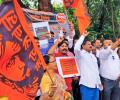
The Bombay high court on Friday constituted a three-judge special bench to hear the pleas challenging the constitutional validity of the law providing Maratha reservation following a Supreme Court directive.
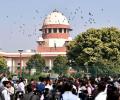
"The prejudice against Urdu stems from the misconception that Urdu is alien to India. This opinion, we are afraid, is incorrect as Urdu, like Marathi and Hindi, is an Indo-Aryan language. It is a language which was born in this land," the judges said.

The Supreme Court of India has ruled that maternity leave is a fundamental right and cannot be denied to a woman based on the number of children she has from previous relationships. The court overturned a Madras High Court decision that had denied maternity leave to a Tamil Nadu government school teacher who had two children from a previous marriage. The Supreme Court emphasized the importance of reproductive rights, including maternity benefits, as part of international human rights law. The court also highlighted the right to life under Article 21 of the Indian Constitution, which includes the right to health, dignity, and reproductive choice. The decision has significant implications for women's rights and reproductive healthcare in India.
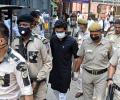
The Supreme Court of India questioned whether former JNU student Sharjeel Imam can be prosecuted in multiple states for sedition based on a single speech. The court is considering a plea to club multiple FIRs filed against Imam in Uttar Pradesh, Assam, Manipur, and Arunachal Pradesh for his alleged inflammatory remarks during protests against the Citizenship Amendment Act (CAA). The court is concerned about the potential for double jeopardy and has indicated that it may transfer the cases to Delhi.
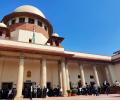
The Supreme Court on Monday agreed to consider listing for urgent hearing the petitions challenging the constitutional validity of the Waqf (Amendment) Act, 2025.

'The State does not accept our rights, what more can I say about this judgment?'
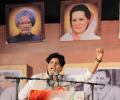
The Supreme Court of India has strongly criticized the police for suppressing freedom of speech by filing FIRs against artists for their performances, stating that mere recitation of a poem, stand-up comedy, or any form of art cannot be alleged to incite hatred or animosity between communities. The court quashed an FIR against Congress MP Imran Pratapgarhi, who was booked for a song performed at a mass marriage function, emphasizing that such actions stifle legitimate expressions of view in a free society.

The Congress party has accused the BJP of engaging in "damage control" after the party distanced itself from comments made by two of its MPs, Nishikant Dubey and Dinesh Sharma, criticizing the Supreme Court. Congress general secretary Jairam Ramesh stated that the BJP's clarification was merely an attempt to mitigate the damage caused by the MPs' remarks and that the party's actions were hypocritical, given the silence of the BJP president on similar comments made by other party members.
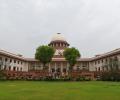
The Indian government has defended the Waqf (Amendment) Act, 2025 in the Supreme Court, arguing that there cannot be a blanket stay on the law as there is a presumption of its constitutionality. The Centre countered the pleas challenging the law's validity, asserting that the amendments were undertaken after a comprehensive study by a parliamentary panel. The government also highlighted the "reported misuse" of earlier provisions and the increase in waqf land, claiming that over 20 lakh hectares were added after 2013.

The Supreme Court of India has directed changes in digital know your customer (KYC) guidelines for persons with disability and acid attack survivors, citing the right to digital access as an intrinsic component of the right to life under Article 21 of the Constitution. The court found that existing KYC procedures, which require visual tasks such as head movements and facial positioning, pose significant challenges for these groups, preventing them from accessing essential services like bank accounts and welfare schemes. The court emphasized the importance of bridging the digital divide and ensuring universal accessibility to digital services for all citizens.
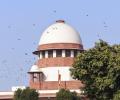
Justices N Kotiswar Singh and R Mahadevan were on Tuesday elevated as judges of the Supreme Court.

The Supreme Court of India directed the government to establish a legal framework to protect domestic workers and address their exploitation.

Supreme Court judge, Justice B R Gavai, expressed hope that the "current difficult phase" in ethnic strife-torn Manipur will be over soon with the assistance of the executive, legislature and judiciary and the state will prosper like the rest of the country. Justice Gavai, who led a delegation of Supreme Court judges that visited Manipur, called upon the people of the state to work together to restore peace and harmony. He also urged the people of the state to work together to restore peace and normalcy, and lauded the natural beauty he witnessed while travelling from Imphal to Churachandpur. He expressed delight in noting that training programmes were being imparted at the relief camps, and thanked the Chief Justice of Manipur High Court and the district legal services authority for their efforts. Justice Gavai also stressed the need for readmission of students who had to drop out of school due to the conflict and called upon the educational institutions and the public to ensure all students complete their education.

A three-judge Supreme Court bench will hear petitions challenging the constitutional validity of the Waqf (Amendment) Act, 2025, on April 16. The petitions, including those by politicians and the All India Muslim Personal Law Board (AIMPLB) and Jamiat Ulama-i-Hind, were filed in the top court challenging the validity of the newly-enacted law. The Centre has filed a caveat in the apex court, seeking a hearing before any order is passed.

The Indian exporting community is "very" concerned about the possible reciprocal tariffs of the US as it could severely hurt MSME shipments to America in the short run, Federation of Indian Export Organisations President SC Ralhan said on Wednesday. He suggested that the government should come forward and support exporters to deal with these tariffs.
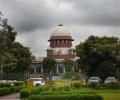
The Supreme Court of India will likely hear a batch of petitions challenging the constitutional validity of the Waqf (Amendment) Act, 2025 on April 15. The Act, which came into force on April 8, has been met with widespread criticism from various stakeholders, including politicians, the All India Muslim Personal Law Board (AIMPLB), and Jamiat Ulama-i-Hind. They argue that the law is discriminatory and violates the fundamental rights guaranteed under Articles 25 and 26 of the Constitution. The petitions allege that the amendments give the government more control over the administration of Waqf, effectively sidelining the Muslim minority from managing their own religious endowments.

The high court erred in holding that the law was violative of the principle of secularism, said a bench comprising Chief Justice of India D Y Chandrachud and Justices J B Pardiwala and Manoj Misra.

The reservation policy requires a fresh relook and new methods are needed for the uplift of people belonging to Scheduled Castes (SC), Schedule Tribes (ST) and Other Backward Classes (OBC), Supreme Court judge Justice Pankaj Mithal said on Thursday.

The BJP government in Gujarat has formed a five-member committee, headed by a retired Supreme Court judge, to assess the need for the Uniform Civil Code (UCC) in the state and to draft a bill for the same. The committee will submit its report within 45 days. The decision has sparked debate with the Opposition claiming it is an attempt to divert attention from pressing issues ahead of the upcoming local body polls, while the government insists the UCC will protect the rights of tribal communities. The committee will consult with religious leaders, including those from the Muslim community.

Stoutly defending Sanatan Dharma, Tamil Nadu BJP President K Annamalai on Thursday dubbed the ruling DMK a casteist party that must be decimated, and questioned its track record on Dalit empowerment.

A group of people staged a protest on Wednesday against alleged "caste discrimination" at the Indian Institute of Management-Bengaluru (IIM-B), demanding the removal of its director. However, IIM Bangalore denied the allegations made by the protesters.

The Uttar Pradesh government has informed the Supreme Court that the disputed "private well" near the Mughal-era Jama Masjid mosque in Sambhal was situated on public land. The state government said the petitioner failed to disclose there was a well within the boundary walls of the mosque known locally as "yagna koop". The committee, in a spot inspection, found that the well was situated outside the mosque boundary wall, the report said. The report said the state was committed to ensuring peace and harmony in the region and any restraint on the use of such public wells by the community at large may not help in achieving that goal.
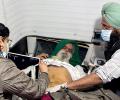
Farmer leader Jagjit Singh Dallewal, who was on an indefinite hunger strike in support of various demands, has broken his fast after the Punjab government intervened and dispersed protesting farmers at Khanauri and Shambhu borders. The Supreme Court lauded Dallewal's efforts and acknowledged the government's action, while also asking for a status report on the situation. Contempt proceedings against the Punjab chief secretary and Director General of Police for not complying with the court's order of providing medical aid to Dallewal were dropped.

Tamil Nadu Chief Minister and DMK president M K Stalin announced that his party will file a case in the Supreme Court against the Waqf Bill passed in the Lok Sabha. The opposition AIADMK expressed solidarity with the DMK's stance, while the BJP members staged a walkout from the Assembly in protest. The CM argued that the amendment was passed at the behest of a few allies despite opposition from majority parties and that it is an attack on the Constitution and religious harmony. The DMK claims the bill threatens the autonomy of the Waqf Board and the Muslim minority population.
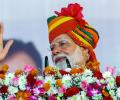
Prime Minister Narendra Modi on Wednesday vehemently defended Home Minister Amit Shah against the Congress' accusation that he insulted B.R. Ambedkar in a Rajya Sabha speech. Modi asserted that Shah had actually exposed the Congress' "dark history of insulting" the architect of the Indian Constitution. The prime minister went on to detail a litany of actions by the Congress party that he claimed demonstrated their disrespect for Ambedkar, including denying him a Bharat Ratna and preventing his portrait from being displayed in Parliament's Central Hall. He also criticized the Congress for failing to address the plight of marginalized communities during their time in power. Modi highlighted the efforts of his government in implementing Ambedkar's vision and honoring his legacy.

Bihar Chief Minister Nitish Kumar on Thursday condemned the torching of 34 houses, mostly belonging to SC/ST communities, in Nawada district and asked the Additional Director General of Police (Law and Order) to visit the site and oversee the probe.

One of Surajpal's three brothers died and he set up a Trust and appointed a caretaker for his property in Bahadurgarh where his ashram is located, the CO said.
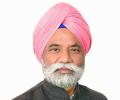
Sources said that Mann is likely to join the Aam Aadmi Party.
